




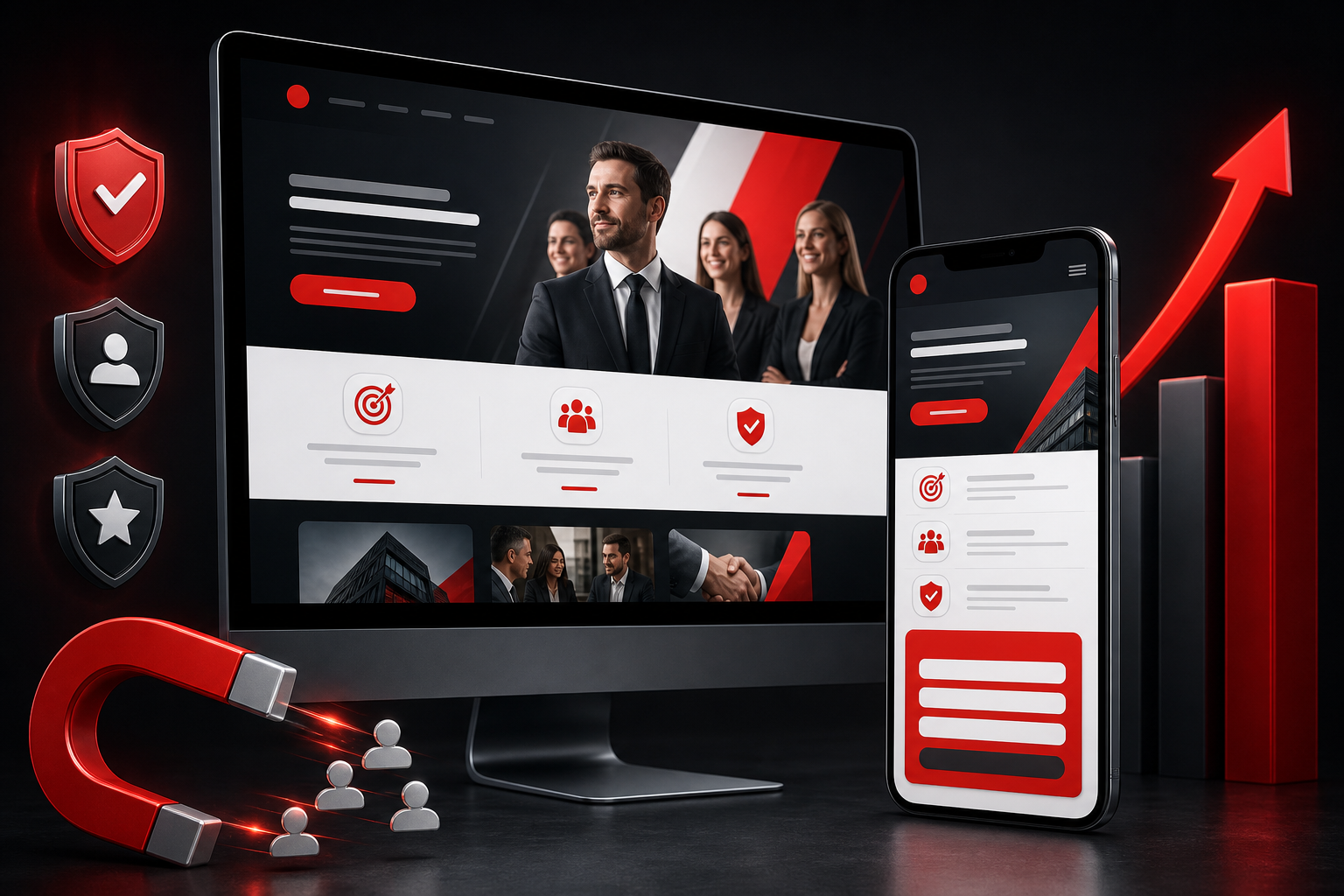
An attractive website can still underperform when visitors cannot quickly understand the offer, verify credibility, or complete the next step. For contractors, practices, studios, salons, and home service companies, solving that gap can create a website that works as an active sales and customer-acquisition tool.
This guide explains the practical elements to review, how they work together, and what to measure. The objective is not to add more software or marketing activity for its own sake. It is to create a simpler customer journey and a more dependable process for the business.
Why This Matters
Customers compare options quickly. They expect relevant information, a trustworthy experience, and a convenient next step. When the message, website experience, lead capture, and follow-up are disconnected, even strong traffic can produce weak results. A coordinated system makes it easier to respond consistently and learn which improvements generate qualified opportunities.
1. Use a Clear Outcome-Focused Headline
This part of the strategy should be designed around the real questions and decisions made by contractors, practices, studios, salons, and home service companies. Review the current customer journey, remove unnecessary steps, and make the desired action easy to understand on both desktop and mobile devices. The strongest implementation is specific, measurable, and connected to a clear team responsibility rather than treated as an isolated marketing task.
Document what happens before and after this step, decide how success will be measured, and test the experience as a customer would. Small improvements become more valuable when the website, marketing channels, CRM, and follow-up process share the same goal.
2. Create Focused Service Pages
This part of the strategy should be designed around the real questions and decisions made by contractors, practices, studios, salons, and home service companies. Review the current customer journey, remove unnecessary steps, and make the desired action easy to understand on both desktop and mobile devices. The strongest implementation is specific, measurable, and connected to a clear team responsibility rather than treated as an isolated marketing task.
Document what happens before and after this step, decide how success will be measured, and test the experience as a customer would. Small improvements become more valuable when the website, marketing channels, CRM, and follow-up process share the same goal.
3. Design for Mobile Decisions
This part of the strategy should be designed around the real questions and decisions made by contractors, practices, studios, salons, and home service companies. Review the current customer journey, remove unnecessary steps, and make the desired action easy to understand on both desktop and mobile devices. The strongest implementation is specific, measurable, and connected to a clear team responsibility rather than treated as an isolated marketing task.
Document what happens before and after this step, decide how success will be measured, and test the experience as a customer would. Small improvements become more valuable when the website, marketing channels, CRM, and follow-up process share the same goal.
4. Reduce Friction in Lead Forms
This part of the strategy should be designed around the real questions and decisions made by contractors, practices, studios, salons, and home service companies. Review the current customer journey, remove unnecessary steps, and make the desired action easy to understand on both desktop and mobile devices. The strongest implementation is specific, measurable, and connected to a clear team responsibility rather than treated as an isolated marketing task.
Document what happens before and after this step, decide how success will be measured, and test the experience as a customer would. Small improvements become more valuable when the website, marketing channels, CRM, and follow-up process share the same goal.
5. Connect Every Inquiry to Follow-Up
This part of the strategy should be designed around the real questions and decisions made by contractors, practices, studios, salons, and home service companies. Review the current customer journey, remove unnecessary steps, and make the desired action easy to understand on both desktop and mobile devices. The strongest implementation is specific, measurable, and connected to a clear team responsibility rather than treated as an isolated marketing task.
Document what happens before and after this step, decide how success will be measured, and test the experience as a customer would. Small improvements become more valuable when the website, marketing channels, CRM, and follow-up process share the same goal.
Implementation Checklist
- Use a Clear Outcome-Focused Headline
- Create Focused Service Pages
- Design for Mobile Decisions
- Reduce Friction in Lead Forms
- Connect Every Inquiry to Follow-Up
- Assign an owner and a measurable outcome to every improvement
- Test the complete journey on a mobile phone
- Review lead quality and booked-customer results regularly
Build a More Connected Growth System
The best results come from improving the complete journey rather than optimizing one metric in isolation. Start with the largest customer or operational gap, make the next action clear, connect it to reliable follow-up, and measure what happens after the inquiry.
Excalibur Marketing helps service businesses combine conversion-focused web design, SEO, paid campaigns, CRM, and automation. Learn more about our digital marketing services or contact Excalibur Marketing to discuss a practical growth system for your business.
